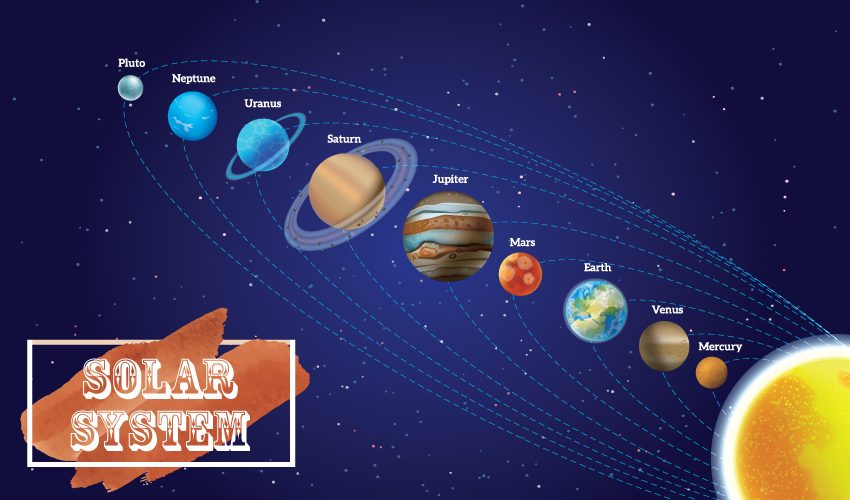
Journey Through Our Cosmic Neighborhood: Exploring the Solar System
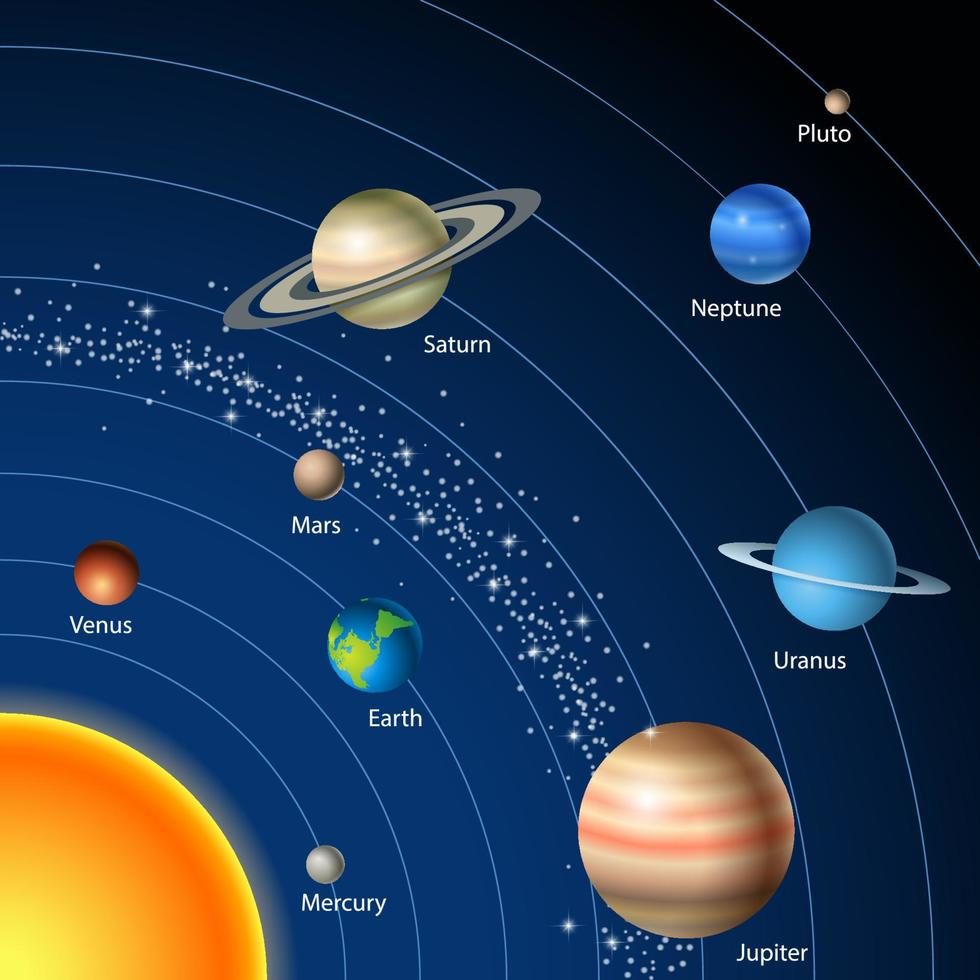
Welcome to Our Solar Neighborhood!
Imagine standing on a rocket ship, looking out into the vast blackness of space. Beneath you lies a family of worlds spinning around one bright, energetic star. That star is our Sun, and together with everything that travels around it, it forms our Solar System!
Today, space explorers, we are taking a tour through our cosmic backyard to discover how gravity holds it all together, meet the eight planets, and learn about the icy comets and rocky asteroids hiding in the shadows.
1. The Center of Attention: The Sun
At the center of our solar system is the Sun. It isn't just a glowing yellow circle in the sky—it is a gigantic ball of burning gas (mostly hydrogen and helium) so huge that over one million Earths could fit inside it!
- Gravity Master: Because the Sun is so massive, its gravitational pull acts like an invisible anchor, holding all the planets, dwarf planets, and asteroids in their paths, called orbits.
- Energy Source: The Sun provides the light and heat necessary to support life right here on Earth. Without it, our world would be a frozen, dark rock!
2. The Inner Planets: The Rocky Worlds
Closest to the Sun are the four inner planets. These worlds are small, dense, and made mostly of rock and metal. They all have solid surfaces you could stand on (if you had a space suit!).
3. The Outer Planets: The Giants
Beyond the inner planets lies a region of giant worlds. These four outer planets are separated from the inner planets by a huge ring of space rocks known as the Asteroid Belt.
The Gas Giants
- Jupiter: The largest planet in the solar system. Its famous Great Red Spot is actually a gigantic storm that has been raging for hundreds of years and is bigger than planet Earth!
- Saturn: World-famous for its magnificent, bright ring system made of billions of chunks of ice and rock. Saturn is so light that if you found a bathtub big enough, it would float!
The Ice Giants
- Uranus: A pale blue planet that rotates on its side! Scientists think a huge collision long ago knocked it sideways.
- Neptune: The farthest official planet from the Sun. It is a dark, cold, windy ocean world with super-fast winds reaching over 1,200 miles per hour!
4. How to Remember Planet Order
To remember the order of the planets from closest to farthest from the Sun, use this classic memory trick (mnemonic):
My Very Educated Mother Just Served Us Noodles!(Mercury, Venus, Earth, Mars, Jupiter, Saturn, Uranus, Neptune)
5. Beyond the Planets: Other Cosmic Objects
The solar system isn't just made of eight planets and the Sun! It is filled with other fascinating space objects:
- Moons: Natural satellites that orbit planets. Earth has 1 moon, but Jupiter has over 90!
- Dwarf Planets: Smaller round worlds like Pluto that share their orbits with other debris. Pluto was considered the 9th planet until 2006!
- Asteroids: Chunky rocks floating in space, mostly found in the Asteroid Belt between Mars and Jupiter.
- Comets: "Dirty snowballs" made of ice, dust, and rock. When they get close to the Sun, the heat melts the ice, creating a bright glowing tail millions of miles long.
Space Explorer Quick Check!
Test your cosmic knowledge with these quick questions:
- Which planet is known as the hottest planet in our solar system?
- What force keeps the planets in orbit around the Sun?
- What separates the inner rocky planets from the outer giant planets?
1. Venus (because of its thick, heat-trapping atmosphere!)2. Gravity3. The Asteroid Belt